Yamaha YAS 275

•November 27, 2009 • Leave a Comment

Stock photo of a Yamaha YAS 275

A first in my shop – an Indonesian made Yamaha Saxophone. It appears to be quite similar to the old YAS-23, with some cosmetic changes and a darker lacquer.  Here is a review of it from an excellent English site, written by Mr. Stephen Howard.

Having finished work on the horn, I find that I agree with most of what Mr. Howard has to say about it.  Especially the issues with the low D key – the pad cup is way too small.  The only point on which we differ is on the high-F# key.  I have always thought it to be wasted on a student instrument, just one more thing junior can create problems with. Overall it seems to be quite similar to the YAS models made in China that are much the rage over here.  I am curious why Yamaha releases horns manufactured in different countries in different markets.

Cleaning up continued

•November 23, 2009 • Leave a Comment

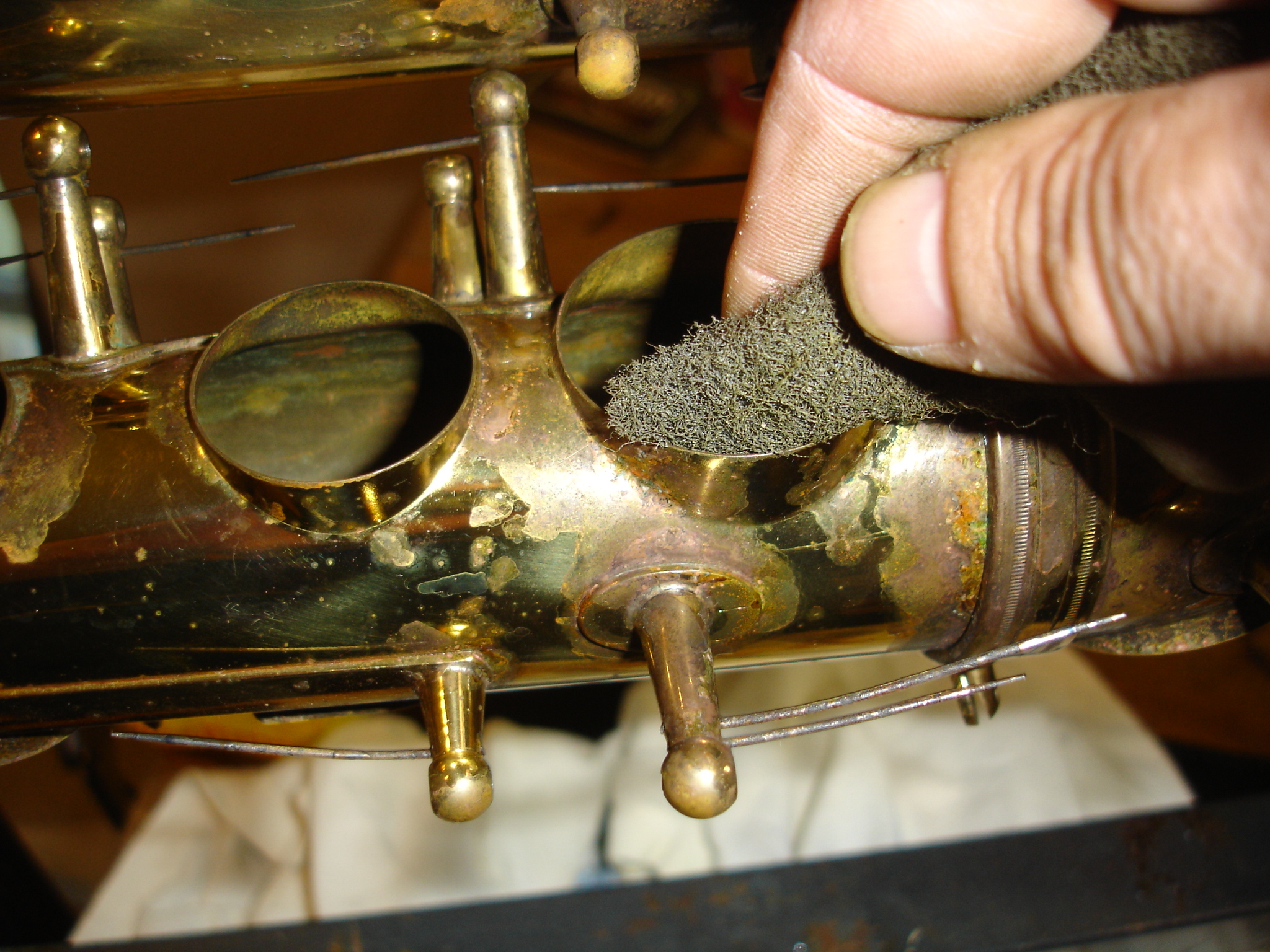
"0000" pseudo-steel wool to make sure all toneholes are as clean as can be.

Further cleaning procedures can be seen here.


Saxophone Rebuild: Day 2

•November 22, 2009 • Leave a Comment

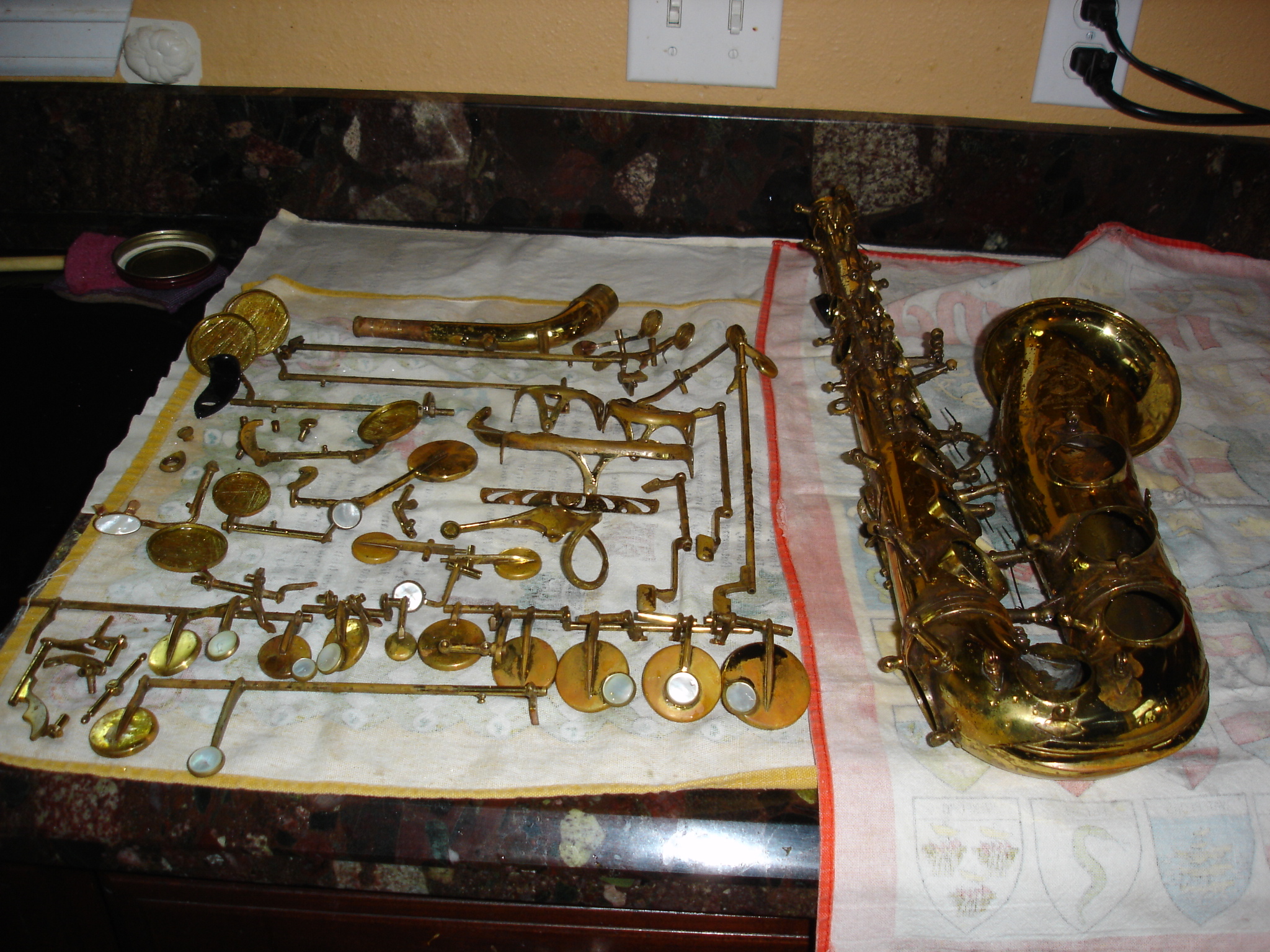
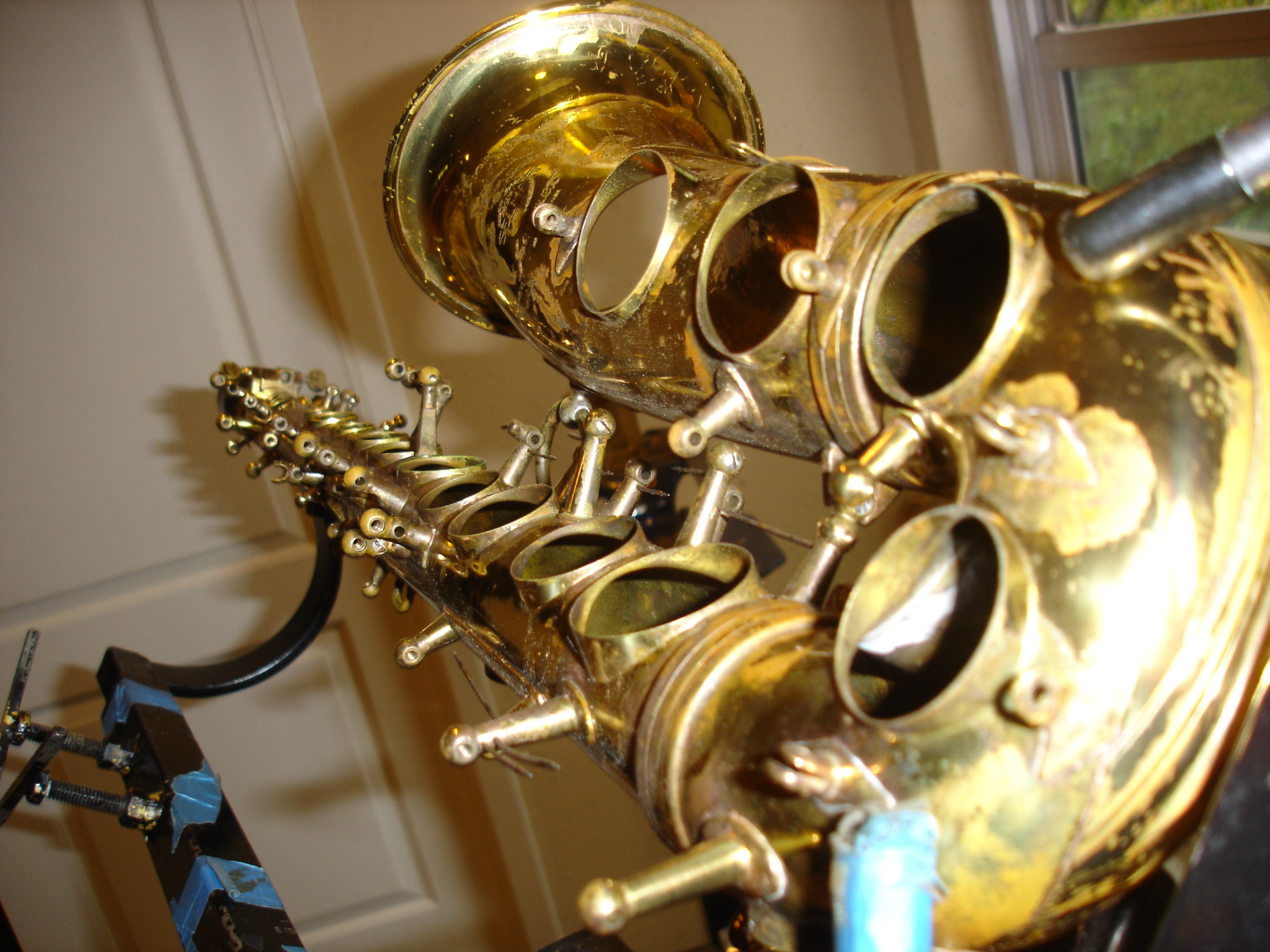
Here is day two of the Mark VI rebuild.  The mundane act of cleaning.

Documented Selmer saxophone rebuild.

•November 22, 2009 • Leave a Comment


body with no keys


Started a new page today regarding a long term project rebuilding a Selmer Mark VI alto saxophone.  If you have ever been curious about the complete job, tune in Here for more details.

New Tool Day!

•November 16, 2009 • Leave a Comment

DSC01926

V-Block

I had to order something to fill out a minimum requirement with Allied supply, so I finally purchased a V-block.  It is used on a vice to hold round rods in place.


How to Destroy a Saxophone Neck 101

•November 2, 2009 • 4 Comments

Selmer Reference 54 Kookaburra neck. No way to make that look like new

fv391102001

Heavy Metal

•November 2, 2009 • Leave a Comment
Baritone Quartet

Baritone Quartet

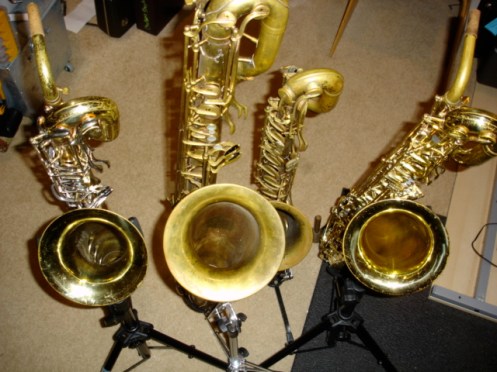
Recently a friend brought his recent acquisition over so we could compare baritones.  Took the rare opportunity to photograph all that were present.  From left to right:

  • H-couf Superba 2 low A bari
  • H-couf Superba 2 Bari to low Bb
  • The Martin Baritone Saxophone (I believe this is the Martin Committee model)
  • Yamaha YBS-52.


Oboe… Oh NO!!

•October 21, 2009 • Leave a Comment
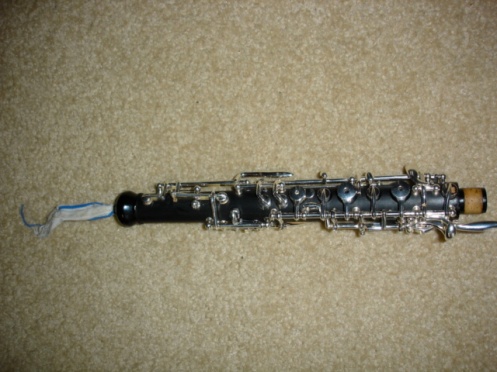
Triebert Oboe with stuck swab

Triebert Oboe with stuck swab

This is a first for many reasons.

  1. First stuck swab I have seen in my shop since i founded it.
  2. First oboe a from a new client.
  3. First time i have seen an off brand oboe that was not bad. Its no Reynard, mind you, but played better than a worn out Selmer.
  4. Overpriced for what it is.  Ok, that’s not a first…..

lack of lacquer

•October 20, 2009 • Leave a Comment
P. Muariat after 6 months in the Houston humidity

P. Muariat after 6 months in the Houston humidity

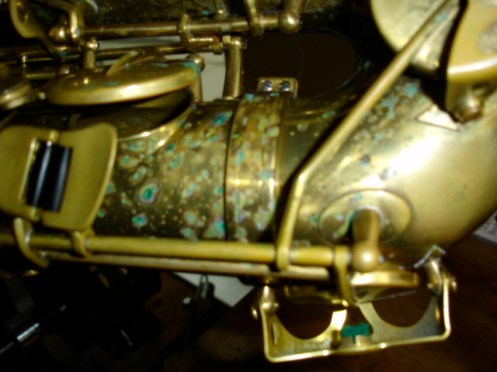
Above is an example of what the climate in Houston does to a unlacquered brass instrument.  A growing trend in the manufacturing side of the industry is to produce horns with no finish.  Bald brass.   P. Muariat.  Yamaha, Borgani, Yanigisawa, and a whole host of other brands produce horns without any protection on the brass. This is not unique to the saxophone world – many brass instruments are produced like this as well. Claims like “Lose the dampening effect of all that lacquer and let your horn resonate freely” and “the absence of lacquer allows the finish to age over time, forging a mature sound that is uniquely your own” abound.

I am not going to express an opinion  about the effect lacquer has on the playability of a saxophone – have heard all sides to that argument since as an apprentice a band director had me strip the lacquer off some french horn bells because (no kidding) “it will make them play more in tune.” What i would like to address is how a necked brass body can be kept up and  keep it from getting as bad as the above relatively young saxophone.

  1. Lacquer it.  Ok, I realize that is a bit extreme, and probably not a useful option.
  2. Aerosol Furniture polish.  Spray some on a soft lint free cloth and wipe down the metal.  The solvents will remove any oils, and the wax will help protect the finish.  Do this carefully, as you do not want to jar any keys nor knock off any key corks.  I just read an interesting article linking these products to neurotoxins, so I may rethink my usage.  There are several options for home made furniture cleaners I may look into in the future.
  3. Wax.  carnauba Car Wax.  This requires that the horn be disassembled, as you do not want to get this on any organic part.  Applied as directed (bypass the buffing part) it forms a durable shield between the exposed brass and the atmosphere.  When I got the ruined lacquer off the H Couf baritone saxophone project that I have been working on for the past 4 years, i waxed it repeatedly.  That body still has not started to seriously degrade.
  4. Always wipe the body down. Keep the surface free of debris and oil will help.

Here is an in depth article on the chemical process involved in brass oxidation, copyright 2002 by Lois Fruen

Shellac.

•September 25, 2009 • Leave a Comment
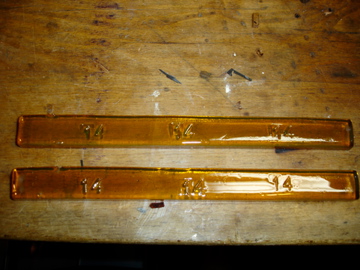
Before - Shellac stick.

Before - Shellac stick.

Different repair techs use different pad glues.  Most contemporary saxophones and clarinets are padded using a form of hot glue, not too dissimilar from the hot glue used in arts and crafts.  There are many commercially available products from the band instrument suppliers, all variations on the basic theme.  I was originally trained using shellac, then went through a second apprenticeship using hot glue.  When I started running my own shop, I quickly switched back.

From the Votaw catalogue:  “For many years shellac was the standard adhesive for woodwind pad installation. Although recent developments in thermoplastic (hot melt) glues,  such as our Surduzstick, provide many desireable qualities for pad work, there are still technicians who prefer the working characteristics found with shellac. Likewise, some players discern a more favorable tonal quality as a result of using shellac, and also find a more firm, defined tactile response on key closure provided bt the harder shellac over the more pliable thermoplastic adhesives.”
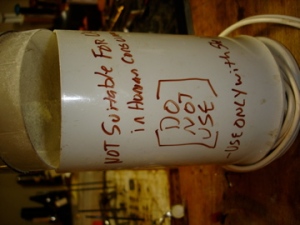
Post-modern Coffee grinder

Post-modern Coffee grinder

I take the shellac sticks, break them up and run them through a coffee grinder (dedicated to this purpose, never to grind a bean again.)  The resultant powder is easily measured out using a specific set of spoons to lay the glue into the key cup.  More precise than just melting the stick into the cup, and often less messy.  I got the  idea to do this from George’s Glue, available from Kraus music products

From the grinder: “Not suitable for use in human consumption [DO NOT USE] -use only with shellac.
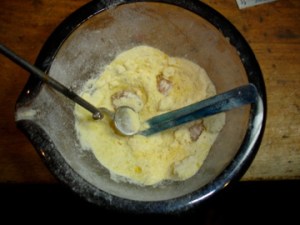
After - Powdered Shellac

After - Powdered Shellac